




Find Time for a Pause at the Prairie this Summer
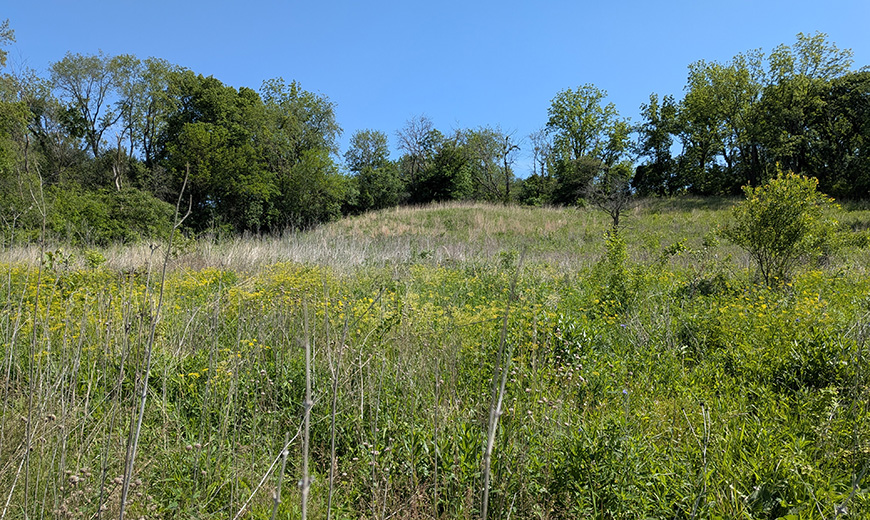
Just about a mile walk from Hickory Knolls Discovery Center sits a small, but distinctive, natural space. It’s here where longtime naturalist Pam Otto likes to sit and take in the view.
“It’s up on a hill, and when there’s foliage on the trees, you can’t see roads and the sound of traffic is absorbed,” said Otto, adding that the pristine scenic vista gives one the sensation of having traveled back in time.
Recently named Pam’s Prairie in honor of Otto’s retirement from the St. Charles Park District, the space largely consists of dry native grasses. A sand prairie, it is also a testament to the efforts of the park district’s ecological restoration staff, whose diligent care has enabled several species to flourish.
“The plants that grow there you just don’t see in many other places,” Otto said.
Indeed, prairie itself is a rarity, with less than .01% of the state’s original 21 million acres of prairie remaining today. Among Otto’s favorites that populate this uncommon and delicate ecosystem is Leadplant.
“The roots go way down, it’s the type of plant that would have caused an early settler’s plow to come to a halt,” mused Otto of the shrub-like plant with distinguishing spikes of purplish-pink flowers.
Another is a grass identifiable by its blue-green color.
“Little Bluestem is a gorgeous plant that grows to just a little over knee high,” Otto said.
Alongside the plants in their varying shapes and sizes live the wildlife drawn to the prairie for habitat and sustenance.
Otto remembers vividly her discovery of a coyote den.
“It looked like someone dumped a pile of play sand from where the coyotes dug it out,” she recalled.
Birds are also frequent visitors. Goldfinches and the small black-and-white Downey woodpeckers are often spotted, as are a host of pollinators including swallowtail and red admiral butterflies as well as a number of bee species.
Though the nature maven enjoys the restored area any time of year, one season in particular stands out.
“Prairies are the last of our natural areas to wake up from dormancy,” she said. “The prairie is just starting to wake up now, and in late summer into fall, all the grasses make for a sea of color and movement.”
She recommends people find time in their day-to-day lives to explore and sit for a spell on a bench overlooking the prairie, perfect for watching summer sunsets.