




Preserving habitats for native plants, animals and insects
Invasive plants occupying space, buckthorn growing unchecked are no match for the dedicated Ecological Restoration team at the St. Charles Park District.
Because even Mother Nature needs a hand decluttering spaces.
The St. Charles Park District’s Ecological Restoration team, with support from community volunteers, takes on the mission of helping the natural areas rebuild by supporting the native plants, animal, and insect populations, creating areas everyone can enjoy.
The St. Charles Park District manages more than 600 acres of natural areas in ecosystems that include prairies, wetlands, savannas, and woodlands. Some locations are home to multi-ecosystems.
As Ecological Restoration Supervisor Patrick Bochenek oversees the natural areas and the ongoing restoration efforts for the St. Charles Park District. The restoration work continues year-round, from brush clearing in the winter to prescribed fire to clear out invasive plants. In summer, there’s a volunteer focus on seed collection, harvesting the seeds from the native plants that will then be planted in other natural areas.
The park district invites volunteers from the community to assist with its natural areas. Every Saturday, volunteers can help restore and maintain the natural areas, in collaboration with the park district staff. Volunteers are able to spend time in nature and be a part of a local park’s restoration, but there’s something more growing in the program that brings people of varying ages and backgrounds together.
“This year, one of our seasonal employees for the summer started as a volunteer,” Bochenek said.
He continued, “People connect with each other, and they connect with the project and can see how they made a difference.”
Volunteers register via email, naturevolunteers@stcparks.org or call 630-513-4399 to get a weekly update on locations and activities.
Some volunteers are looking for way to give back and discover a true love for mother nature. That’s how Bochenek found his way to his current role. In his early 20s he found himself working but not finding joy. He volunteered to help a few friends in Wisconsin who were working on restoration projects around Madison, Sauk City and Devils Lake and found a spark for the work.
“I connected with it,” Bochenek said.
So, in his mid-20s he returned to school earning a degree with an emphasis on ecological restoration.
Restoration work isn’t simple. Anyone who’s pulled weeds out of their garden bed knows that in a week, they will have to repeat again. The park district’s restoration team eliminates invasive plants and uses herbicide to help the process of safely removing them.
Some of the big invasive plants include honeysuckle, with its pink flowing flowers in the spring and the persistent buckthorn, which can grow so large it appears to look like a tree.
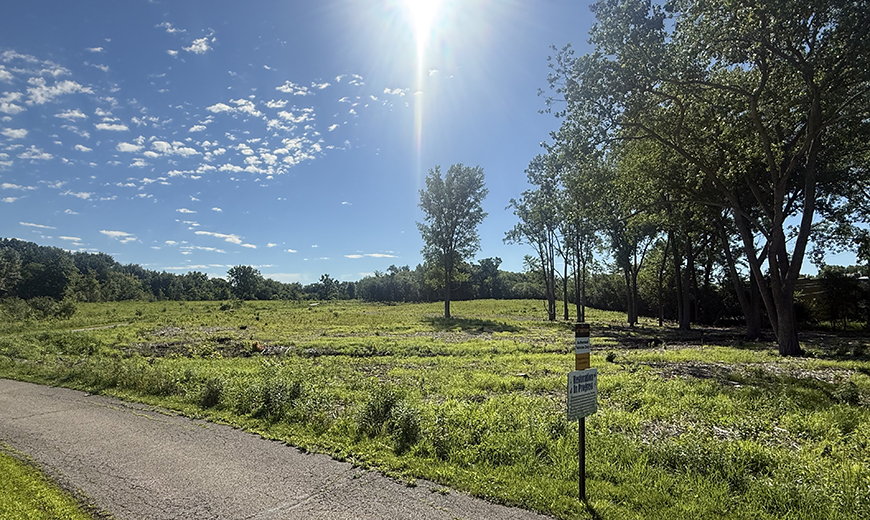
One of the areas the park district is focusing on this year is Timber Trails Park, located at the north end of 17th Street in St. Charles. This year the park district staff has cleared about two acres of invasive species as it helps to restore a prairie , Bochenek said. This natural area is home to about five acres of prairie and the work this spring is helping to further increase that.
Restoration work is more than tackling invasive plant species, as weather and changing climate conditions also pose challenges. There were some tense moments earlier this spring when the Fox River experienced flooding that spilled into natural areas including Ferson Creek Fen, Bochenek said.
“When we had the flooding from the Fox, that could have been catastrophic for the ecosystem,” Bochenek said. “We did see heavy damage, but as a testament to the area, it was able to respond well to disturbance.”
Bochenek said the ongoing restoration work at Ferson Creek Fen, helping to cultivate native species and removing invasive plants, helped build the ecosystem that was able to rebound when the flood waters receded.